
Speakers
The following speakers participated in the Symposium
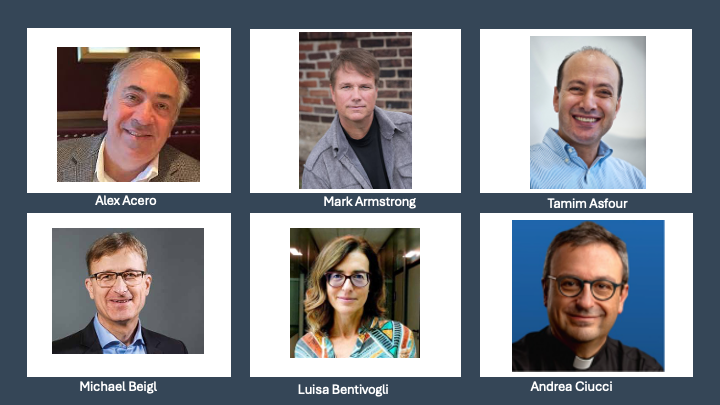


Alex Acero
Alex Acero is Distinguished Scientist at Zoom, heading AI Incubations. Until 2024, he was Senior Distinguished Engineer and Siri Chief Scientist at Apple, leading speech recognition, speech synthesis, and on-device language understanding for Siri, the first mainstream voice assistant. His team contributed to several Apple features including dictation, Voice Control for motor skills impaired users, screen readers for vision impaired users, and spoken navigation in CarPlay. Prior to joining Apple in 2013, he spent 20 years at Microsoft Research managing teams in speech, audio, multimedia, computer vision, natural language processing, machine translation, machine learning, and information retrieval. His team at Microsoft Research shipped Bing Translator, contributed to Xbox Kinect and demonstrated the superiority of deep neural networks over mixtures of Gaussians for large vocabulary speech recognition, which helped jump-start the deep learning revolution. He is Affiliate Faculty at the University of Washington.
Dr. Acero is a member of the National Academy of Engineering, and Fellow of IEEE, ISCA, AASF, and AAIS. He is the recipient of the IEEE James L. Flanagan Speech and Audio Processing Award, the IEEE Norbert Wiener Society Award. He received best paper awards from the IEEE Signal Processing Society and CIKM. Alex is author of the textbook “Spoken Language Processing”, over 230 technical papers and 160 US patents. Alex has served in the Board of Directors of IEEE and IEEE Foundation, and as President of IEEE Signal Processing Society. Besides the UW ECE Advisory Board, Alex serves in IDIAP’s International Advisory Council, Stony Brook University’s Industry Advisory Board, and previously served in boards including EPSRC Natural Speech Technology Advisory board and CMU College of Engineering. Alex received a PhD from Carnegie Mellon.
Mark Armstrong
Mark Armstrong is a singer-songwriter, physicist, computer scientist, actor and public speaker. His first published song, “Flight of Fancy”, is the end-credit song for the documentary film “Armstrong” and has been performed many times including at Carnegie Hall, the Kennedy Center (with the National Symphony) and various other places in Europe and the United States. Mark resides in Cincinnati, Ohio with his wife Wendy and they have three children. Mark is passionate about music, technology, exploration and doing all we can to preserve our amazing planet Earth. Mark is the younger son of Neil and Janet Armstrong.
Tamim Asfour
is the Spokesperson of the Robotics Institute Germany (RIG) and Full Professor of Humanoid Robotics at Karlsruhe Institute of Technology (KIT), Germany. He directs the High Performance Humanoid Tefchnologies Lab (H2T) at the Institute of Anthropomatics and Robotics. His research focuses on the engineering 24/7 humanoid robot systems that integrates artificial intelligence, informatics, and mechatronics to perform versatile tasks in the real world while learning from humans, experience and interaction with the environment Tamim is the developer of the ARMAR humanoid robot family. He has held visiting professorships at Georgia Tech, Tokyo University of Agriculture and Technology, and the National University of Singapore. He serves as the Editor-in-Chief of the Robotics and Automation Letters (RA-L), and is the Founding Editor-in-Chief of the IEEE-RAS Humanoids Conference Editorial Board. He is also the scientific spokesperson of the KIT Center “Information · Systems · Technologies” (KCIST).
Michael Beigl
Since 2010, Michael Beigl is Professor at the Karlsruhe Institute of Technology (KIT, former University of Karlsruhe) and holds the chair position for Pervasive Computing Systems is head of the TECO research group. Since 2024 he is Co-Speaker of the KIT HealthTech Center.
Since 2026 he is dean of the Department of Informatics (former dean from 2012 to 2015, vice dean from 2022-2026). From 2012-2024 he was spokesperson of the Big Data Centers SDSC-BW and SDIL. Previously, he was Professor for Professor for Distributed and Ubiquitous Systems and Head of the DUS Research Group at the TU Braunschweig from 2006 to 2010 and Visiting Associate Professor at the Hide Tokuda Lab, Keio University, Japan in autum 2005. From 1996-2005 he was researcher and head of the TECO research group at the University of Karlsruhe, where he received his PhD (Dr.-Ing.) (2000) in Computer Science on the topic of Ubiquitous Computing Environments (communication in interactive spaces). His research interests evolve around people and services at the centre of communication and information technology in the field of Ubiquitous Computing with a focus on Wearable Computing Systems, AI driven processing of sensor generated data and Wearable Human Computer Interaction (HCI). In his industrial projects he is interested in Health Technology, Internet of Things (IoT), applied AI, mobile computing and Industry 4.0 applications. His current favourite research platforms are EdgeML and OpenEarable.
Luisa Bentivogli
Luisa Bentivogli heads the Machine Translation Group at Fondazione Bruno Kessler (FBK). From 2008 to 2013 she was assigned to the Centre for the Evaluation of Language and Communication Technologies (CELCT), first as Research Manager with the role of coordinating the activities of the centre (2008-2012), then as Director of the centre (2012-2013). Her research interests include the evaluation and analysis of Machine Translation (MT) and Speech Translation (ST) systems, creation and annotation of multilingual resources, translation technologies for translators, crowdsourcing for natural language processing, and computational lexicography in a multilingual environment. Her current focus is on creating multilingual resources for speech translation (ST) and on assessing and mitigating gender bias in MT and ST, for which she recently won an Amazon Research Award. Over the years, she has been involved in several EU-funded projects, including EuroSub (2021-2022), MateDUB++ (2021), MateDUB (2020), CEF Data Marketplace (2019-2021), EnetCollect (2017-2021), ModernMT (2015-2017), CRACKER (2015-2017), MosesCore (2012-2015), Excitement (2012-2014), EU-Bridge (2012-2014), MateCat (2011-2014), FlareNet (2008-2011), MEANING (2002-2005), in projects funded by the Autonomous Province of Trento, including LiveMemories (2008-2011), OntoText (2004-2007), WebFaq (2001-2004), and in job orders from private companies and public institutions (ongoing SmarTerp, TINIA).
She co-authored more than 90 scientific publications and serves as reviewer for journals, conferences and workshops. She regularly supervises internship, master, and PhD students. She has been involved in the organization of different tasks in several evaluation campaigns (e.g. IWSLT, RTE, SemEval, EVALITA) and other international events aimed at both the scientific community and translators (MT Marathon 2014, School of Advanced Technologies for Translators – SATT – 2016, 2017, 2018, 2019).
Andrea Ciucci
Born on February 5, 1967, this priest of the Archdiocese of Milan pursued an academic career in philosophy. After graduating from the University of Milan in 2004, he earned a doctorate in the philosophy of religion from the Pontifical Athenaeum of Sant’Anselmo in Rome in 2017. Before moving to the Roman Curia, Ciucci served, among other roles, as a parochial vicar and coordinator of youth pastoral care in downtown Milan. Ciucci began his work at the Vatican in 2012 with the then-Pontifical Council for the Family. Since 2016, he has served as the secretariat coordinator for the Pontifical Academy for Life. Alongside his administrative duties, he teaches at the Pontifical John Paul II Theological Institute for Marriage and Family Sciences and holds the position of Secretary General of the "RenAIssance" Foundation, which addresses ethical issues surrounding artificial intelligence.
Dirk van Compernolle
Dirk Van Compernolle has been active in the domain of speech recognition for over 30 years both as an academic and in a corporate environment.
His research interests include robust speech recognition, speech enhancement and non-parametric machine learning applications. One recurring theme is efficiency in machine learning; i.e. optimizing performance when data resources are scarce as is still the case for many languages and applications in the field of speech recognition.
Nagin Cox
Nagin has been exploring since she decided as a teenager that she wanted to work at NASA’s Jet Propulsion Laboratory. She was born in Bangalore, India, and grew up in Kansas City, Kansas, and Kuala Lumpur, Malaysia. She is a Systems Engineer at NASA’s Jet Propulsion Laboratory. Nagin has held leadership and system engineering positions on interplanetary robotic missions including the Galileo mission to Jupiter, the Mars Exploration Rovers, the Kepler exoplanet hunter, InSight, the Mars Curiosity Rover, the 2020 Perseverance Rover, Mars Sample Return, Europa Clipper, and the Mars Oxygen ISRU Experiment (MOXIE) team. She is currently a Mission Lead on the Mars 2020 Perseverance Rover and a system engineer on the Europa Clipper mission.
Nagin is honored to be the namesake for Asteroid 14061. She has also received the NASA Exceptional Service Medal and two NASA Exceptional Achievement Medals. She is a U.S. Department of State’s STEM Speaker and has spoken to audiences around the world on the stories of the people behind the missions. Her lecture on Mars Time on the TED Talk website has been viewed more than two million times. Before her time at JPL, she served in the US Air Force including duty as a Space Operations Officer at NORAD/US Space Command. Nagin holds engineering degrees from Cornell University and the Air Force Institute of Technology as well as a psychology degree from Cornell.
She is a past member of Cornell University’s President’s Council for Cornell Women and has served on the Boards of the Griffith Observatory Foundation and Impact Personal Safety: Self-Defense & Empowerment for Women. Nagin sits on the Advisory Councils for the Women’s Rights Division of Human Rights Watch, the Planetary Society and Space for Humanity. She is a published children’s book author and an adjunct Professor of Practice at the Air Force Institute of Technology. She is a fellow of the Explorers Club and is on the Board of the world famous Adventurer’s Club of Los Angeles.
Mona Diab
Prof. Mona T. Diab is the Director of the Language Technologies Institute (LTI) at Carnegie Mellon University and a Full Professor in the School of Computer Science. Dr. Diab is a globally recognized expert in computational linguistics and natural language processing (NLP). Her career spans academia, industry, and international leadership roles, including a tenured full professorship at George Washington University, Amazon AWS, and Meta, where she served as Lead Responsible AI Research Scientist and Technical Lead. An ACL Fellow, she has received numerous accolades, including the King Salman Global Arabic Academy award for her contributions to Arabic language technologies and recognition among the Top Global AI Scientists of Arab Descent by MIT Technology Review. As of July 2025, Dr. Diab will be serving as an elected member of the CRA board of Directors.
Dr. Diab's research focuses on advancing trustworthy NLP and responsible AI systems, particularly in low-resource and multilingual contexts. Her work includes innovations in controllable natural language generation, cross-lingual processing, computational social science, and health analytics. She has spearheaded high-impact initiatives, such as democratizing access to scientific content through machine translation (ACL 60-60) and addressing bias and compliance in AI systems. A pioneer in Arabic NLP, Dr. Diab has developed foundational resources and tools that bridge linguistic, social, and computational disciplines. She currently directs the R3LIT Lab (pronounced "relit") at CMU.
As an active member of the international research community, Dr. Diab has co-founded initiatives like the *SEM Conference and the Computational Approaches to Linguistic Code-Switching workshops. She serves on editorial boards of leading journals and advisory committees for global AI governance. With a steadfast commitment to mentorship, she continues to shape the next generation of computational linguists while fostering innovation at the intersection of AI and societal impact.
Clayton Eveland
Eveland maintains the aircraft IAW the Gulfstream CMP program and works long and hard to ensure everything is compliant with the regulations. He has made modifications to the aircraft to support scientific instrumentation both internally and externally. This has involved external pylons, window mounts, and belly mounts. He uses exiting structure when able and manufacturers what is needed. All of the instruments are removed after each campaign and a new set is installed and tested as dictated by the science. He has upgraded the exiting power in the aircraft from the original 600 amps to 1,200 amps. All of the instrumentation generates an enormous amount of heat. Eveland has re-worked the air cycle machine and an additional Freon air conditioner. In addition to this, he has engineered self-contained, window mounted, heat exchangers. The average temperature in the cabin has dropped nearly 20 degrees due to his efforts. Eveland has worked on maintenance and instrument issues in very remote parts of the world, including the Amazon rainforests and the North Slope of Alaska in just the past year. He and his crew have maintained greater than a 99 percent dispatch rate for more than two years. On top of all of his maintenance duties, Eveland is a type rated Captain in the G-I.
Marcello Federico
Marcello Federico is the Senior Principal Scientist/Director of EU INTech, Amazon Stores' European technology hub. Previously, he led science teams at AWS AI Labs in USA (2018-2024) and directed research units at Fondazione Bruno Kessler (1997-2017), while also lecturing at the University of Trento (2001-2022). His research in machine translation, natural language processing, and AI has resulted in about 250 published papers. He co-founded two tech companies and serves as President of the ACL SIG on Spoken Language Translation. Marcello is a senior member of both the IEEE and the ACM.
Jan S. Hesthaven
born in 1965, studied Computational Physics and earned his doctorate at the Technical University of Denmark in Copenhagen. Between 1995 and 2013, he was a faculty member at Brown University in the USA, where he was Founding Director of the Center for Computation and Visualization (2006 to 2013) and co-founder of the Institute for Computational and Experimental Research in Mathematics. From 2013, Hesthaven had been Professor of Mathematics of the École Polytechnique Fédérale de Lausanne (EPFL) in Switzerland, and from 2021 to 2024, Provost and Vice President for Academic Affairs of EPFL. His scope of responsibility included strong integration of research and academic education, all appointment and promotion procedures, as well as close cooperation with the President of EPFL on the university’s strategic orientation.
Hesthaven is Fellow of the Royal Danish Academy of Sciences and Letters, the American Mathematical Society, and the Society of Industrial and Applied Mathematics. He also is member of the European Academy of Sciences and Academia Europaea. In May 2024, the Technical University of Denmark awarded him an honorary doctorate.
On October 1, 2024, Jan S. Hesthaven took office as President of KIT.
Scott Hourin
Scott Hourin is a Product Manager for Information Systems Technology (IST) Research Corporation and a Lieutenant Colonel in the United States Marine Corps Reserves (USMCR). Mr. Hourin grew up on the Gulf Coast of Mississippi. In 1994, he graduated from the University of Richmond with a Bachelor of Arts in Political Science, was commissioned in the USMCR, and was trained as an Infantry Officer. After multiple deployments to the Persian Gulf, in October, 1995, Mr. Hourin left active service to pursue a professional career in software and technology management consulting. In March, 2003, Mr. Hourin was involuntarily recalled to active duty in support of Operation Iraqi Freedom. During his 26 months in an active status, Mr. Hourin managed the operational experimentation and deployments of multiple R&D projects, to include gunshot detection/location and both text and speech machine translation. In May, 2005, Maj Hourin left active service and took a position with the Marine Forces Pacific Experimentation Center (MEC) as a project manager for operational experimentation and assessment with new technologies. During this time, Mr. Hourin organized the data collection and foreign language expert programs for the Language and Speech Exploitation (LASER) Advanced Concept Technology Demonstration (ACTD), the DARPA TRANSTAC program, and the Sequoyah Machine Foreign Language Translation Systems US Army Program Office. In June, 2009, Mr. Hourin mobilized to active duty and deployed to Helmand Province, Afghanistan, where he served as the Deputy Science and Technology Officer. In this role, he supported the Army Research Lab’s Pashto speech data gathering project by arranging for 50 Afghan soldiers to conduct recordings of weapons training classes. Mr. Hourin returned to his civilian job in January, 2010, and began the Speech-to-Speech Translation Tool (S2T2) project. Funded by Office of Naval Research, S2T2 was focused on improving the techniques and tools for rapid development of speech machine translation for less common languages. Also during this time, Mr. Hourin managed the Marine Civil Information Management System (MARCIMS) pilot and operational experimentation project. In 2014, MARCIMS was adopted by the USMC as the official platform for civil information management. In April, 2014, LtCol Hourin returned to active duty with Marine Forces Europe and Africa as the Current Operations Officer. He and his family moved to Böblingen, Germany. In 2015, Mr Hourin returned to his civilian career and managed multiple communications security experimentation projects.
Xuedong Huang
Doctor Xuedong Huang is a leading computer scientist and technology executive in AI and Spoken Language Processing. He is currently the Chief Technology Officer at Zoom Video Communications (USA). Previously, he was a Microsoft Technical Fellow and Chief Technology Officer overseeing Microsoft Azure AI engineering and research, covering Microsoft’s core perceptive and cognitive AI pillars (Speech, Computer Vision, Natural Language, and Decision).
Dr. Huang has co-authored over 170 US patents, two books, and over 100 papers, including a historical speech recognition review with Raj Reddy and James K. Baker for Communications of the ACM reflecting several generations of spoken language R&D. His notable achievements include receiving the Allen Newell research excellence medal in 1992, and IEEE Speech Processing Best Paper in 1993. In 2016, Wired Magazine named him as one of “25 Geniuses Who Are Creating the Future of Business”.
He was recognized as an IEEE Fellow in 2000, and ACM Fellow in 2017 for his contributions to spoken language processing.
Dr. Huang was on the faculty of Carnegie Mellon University from 1989 to 1993. He received his Ph.D., MS, and BS from the University of Edinburgh, Tsinghua University, and Hunan University respectively.
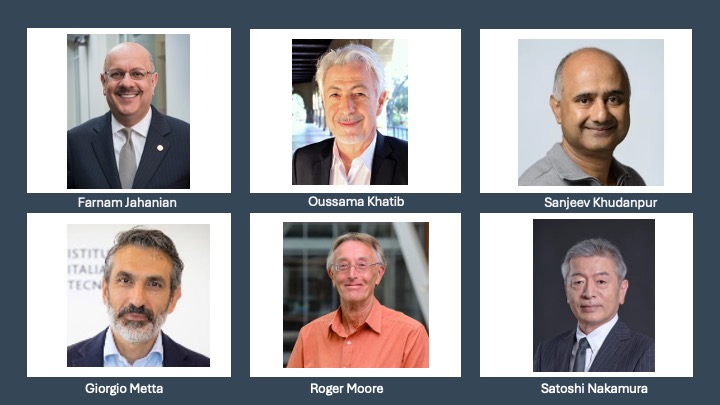
Farnam Jahanian
was appointed the tenth president of Carnegie Mellon University by its Board of Trustees in March 2018. He was previously the university’s provost and later served as interim president from July 2017 to February 2018.
A nationally recognized computer scientist, entrepreneur, public servant and higher education leader, Jahanian brings to CMU extensive leadership and administrative expertise, not only in advancing research and education within and across disciplines, but also in translating research into technologies and practices that benefit society.
He first joined CMU as vice president for research in 2014, where he was responsible for nurturing excellence in research, scholarship and creative activities. In his role as provost and chief academic officer from May 2015 to June 2017, Jahanian had broad responsibility for leading CMU’s schools, colleges, institutes and campuses and was instrumental in long-range institutional and academic planning and implementation.
Prior to coming to CMU, Jahanian led the National Science Foundation Directorate for Computer and Information Science and Engineering (CISE) from 2011 to 2014. He guided CISE, with a budget of almost $900 million, in its mission to advance scientific discovery and engineering innovation through its support of fundamental research. Previously, Jahanian was the Edward S. Davidson Collegiate Professor at the University of Michigan, where he served as chair for Computer Science and Engineering from 2007 to 2011 and as director of the Software Systems Laboratory from 1997 to 2000.
Jahanian has been an active advocate for how basic research can be uniquely central to an innovation ecosystem that drives global competitiveness and addresses national priorities. His highly influential research on Internet infrastructure security formed the basis for the Internet security company Arbor Networks, which he co-founded in 2001 and where he served as chairman until its acquisition in 2010.
Jahanian serves as chair of the National Research Council’s Computer Science and Telecommunications Board (CSTB), sits on the executive committee of the Council on Competitiveness, and is a trustee of the Dietrich Foundation. He is also a board member of the National Center for Women and Information Technology (NCWIT), the Advanced Robotics for Manufacturing (ARM) Institute, and the Allegheny Conference on Community Development, among others.
Jahanian holds a Ph.D. in computer science from the University of Texas at Austin. He is a fellow of the Association for Computing Machinery, the Institute of Electrical and Electronic Engineers and the American Association for the Advancement of Science.
Oussama Khatib
Professor, Department of Computer Science & Director of Stanford Robotics Lab
His research in robotics focuses on novel control architectures, algorithms, sensing, and human-friendly designs for advanced capabilities in complex environments. With an emphasis on enabling robots to interact cooperatively and safely with humans and the physical world, these studies bring understanding of human movement for therapy, athletic training, and performance enhancement. This work on understanding human cognitive task representation and physical skills is enabling transfer for increased robot autonomy. With these core capabilities, we are exploring applications in healthcare and wellness, industry and service, farms and smart cities, and dangerous and unreachable settings – deep in oceans, mines, and space.
Sanjeev Khudanpur
Sanjeev P. Khudanpur, an associate professor of electrical and computer engineering, is an expert in the application of information-theoretic methods to human language technologies, such as automatic speech recognition, machine translation, and natural language processing. He has a secondary appointment in the Department of Computer Science, is a member of the Center for Language and Speech Processing, and is affiliated with the Human Language Technology Center of Excellence.
He received a BTech in Electrical Engineering at the Indian Institute of Technology in 1988 and a PhD in Electrical and Computer Engineering at the University of Maryland College Park in 1997.
Joseph Mariani
Joseph Mariani is Research Director Emeritus at the French National Scientific Research Center (CNRS). He was director of the LIMSI-CNRS laboratory from 1989 to 2000, and head of its „Human-Machine Communication” department, covering various modalities (spoken, written and signed language processing, computer vision, computer graphics, gestural communication, Virtual and Augmented Reality) and various approaches (Computer Science, Signal Processing, Linguistics, Perception, Cognitive Science, Human Factors, Social Sciences). He was Director of the „Information and Communication Technologies“ (ICT) department at the French Ministry for Research until 2006. In the framework of his position at the Ministry for Research, he managed several national programs, and in particular the Technological Research and Innovation Networks on Telecommunications, Software Engineering, Audiovisual and Multimedia and Micro and Nanotechnologies. He launched the Techno-Langue and Techno-Vision actions, addressing technology development and assessment in those domains. He seated in the Board or Scientific Committees of many organizations (ANFr, IGN, OST, INRIA, CGTI, System@ tic, INRS, Institut Telecom…). He then became director of the Institute for Multilingual and Multimedia Information (IMMI), a joint International Laboratory involving LIMSI, the Karlsruhe Institute of Technology (KIT) and RWTH Aachen (Germany), in the framework of the Quaero program. J. Mariani chaired the CNRS „Information Sciences and Technologies” committee and was a member of the CNRS Scientific Committee and Ethics Committee (COMETS), where he coordinated a report on the Ethics of ICT, which resulted in the creation of the national Ethics Committee on Research in ICT (CERNA). On the international scene, he launched and coordinated the FRANCIL Network of the Francophone University Association (AUF), co-founded and chaired the European Speech Communication Association, now International Speech Communication Association (ISCA) and the European Language Resources Association (ELRA), participated in the Boards of ELSNET (European Language & Speech Network of Excellence), FLaReNet (Fostering Language Resources Network) and META-NET (Multilingual Europe Technological Alliance) and was the first general convener of the Cocosda committee. He is or was in the Editorial Committees of the “Language Resources and Evaluation”, “Speech Technology” and “Speech Communication” Journals, and of the “Text, speech and language” book series. He is the author of more than 500 communications and publications.
Giorgio Metta
Giorgio Metta is the Scientific Director of the Istituto Italiano di Tecnologia (IIT). He holds a MSc cum laude (1994) and PhD (2000) in electronic engineering both from the University of Genoa. From 2001 to 2002, Giorgio was postdoctoral associate at the MIT AI-Lab. He was previously with the University of Genoa and from 2012 to 2019 Professor of Cognitive Robotics at the University of Plymouth (UK). He was member of the board of directors of euRobotics aisbl, the European reference organization for robotics research. Giorgio Metta served as Vice Scientific Director of IIT from 2016 to 2019. He coordinated IIT's participation into two of the Ministry of Economic Development Competence Centers for Industry 4.0 (ARTES4.0, START4.0). He was one of the three Italian representatives at the 2018 G7 forum on Artificial Intelligence and, more recently, one of the authors of the Italian Strategic Agenda on AI. Giorgio coordinated the development of the iCub robot for more than a decade making it de facto the reference platform for research in embodied AI. Presently, there are more than 40 robots reaching laboratories as far as Japan, China, Singapore, Germany, Spain, UK and the United States. Giorgio Metta research activities are in the fields of biologically motivated and humanoid robotics and, in particular, in developing humanoid robots that can adapt and learn from experience. Giorgio Metta is author of more than 300 scientific publications. He has been working as principal investigator and research scientist in about a dozen international research as well as industrial projects.
Roger Moore
Prof. Roger Moore has over 50 years’ experience in Speech Technology R&D and, although an engineer by training, much of his research has been based on insights from human speech perception and production. As Head of the UK Government's Speech Research Unit from 1985 to 1999, he was responsible for the development of the Aurix range of speech technology products and the subsequent formation of 20/20 Speech Ltd.
Since 2004 he has been Professor of Spoken Language Processing at the University of Sheffield, and also holds Visiting Chairs at Bristol Robotics Laboratory and University College London Psychology & Language Sciences. Since joining Sheffield, his research has focused on understanding the fundamental principles of speech-based interaction, and in 2017, he initiated the first in a series of international workshops on ‘Vocal Interactivity in-and-between Humans, Animals and Robots' (VIHAR).
As President of both the European Speech Communication Association (ESCA) and Permanent Council of the International Conference on Spoken Language Processing (PC-ICSLP) from 1997, Prof. Moore pioneered their integration to form the International Speech Communication Association (ISCA). He was subsequently General Chair for INTERSPEECH-2009 and ISCA Distinguished Lecturer during 2014-15. He has received several awards, including the UK Institute of Acoustics Tyndall Medal for “distinguished work in the field of speech research and technology“, the NATO RTO Scientific Achievement Award for “repeated contribution in scientific and technological cooperation”, the LREC Antonio Zampoli Prize for "Outstanding Contributions to the Advancement of Language Resources & Language Technology Evaluation within Human Language Technologies", the ISCA Special Service Medal for "Service in the establishment, leadership and international growth of ISCA", and the 2025 ISCA Medal for Scientific Achievement.
Prof. Moore is the current Editor-in-Chief of Computer Speech & Language, and Associate Editor for Speech Communication, Languages, and Frontiers in Robotics and AI.
Satoshi Nakamura
is a presidential chair professor at The Chinese University of Hong Kong, Shenzhen. He is also a professor emeritus at Nara Institute of Science and Technology (NAIST) and Honorarprofessor of Karlsruhe Institute of Technology, Germany. He received his B.S. from Kyoto Institute of Technology in 1981 and Ph.D. from Kyoto University in 1992. He was an Associate Professor in the Graduate School of Information Science at NAIST from 1994-2000. He was Department head and Director of ATR Spoken Language Communication Research Laboratories in 2000-2004, and 2005-2008, respectively, and Vice president of ATR in 2007-2008. He was Director General of Keihanna Research Laboratories and the Executive Director of Knowledge Creating Communication Research Center, National Institute of Information and Communications Technology, Japan 2009-2010. He moved to Nara Institute of Science and Technology as a full professor in 2011. He established the Data Science Center at NAIST and served as a director from 2017 to 2021. He also served as a team leader of the Tourism Information Analytics Team at the AIP center of RIKEN Institute, Japan, from 2017-2021. He is currently a full professor and Presidential Chair Professor at The Chinese University of Hong Kong, Shenzhen, China. His research interests include modeling and systems of spoken language processing, speech processing, spoken language translation, spoken dialog systems, natural language processing, and data science. He is one of the world leaders in speech-to-speech translation research. He has been serving various speech-to-speech translation research projects, including C-Star, A-Star, and the International Workshop on Spoken Language Translation IWSLT. He is currently the chairperson of ISCA SIG SLT (Spoken Language Translation). He also contributed to the standardization of the network-based speech translation at ITU-T. He was a committee member of IEEE SLTC 2016-2018. He was an Elected Board Member of the International Speech Communication Association, ISCA, from 2012 to 2019. He received the Antonio Zampolli Prize in 2012 and retained the title of IEEE Fellow, ISCA Fellow, IPSJ Fellow, and ATR Fellow.
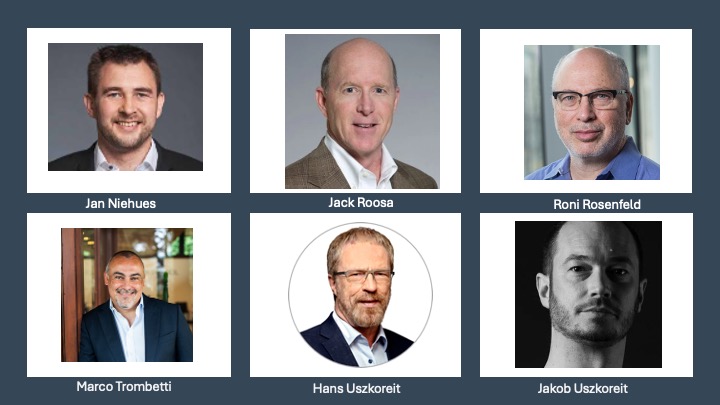
Jan Niehues
Jan Niehues is a professor at the Karlsruhe Institute of Technology leading the “AI for Language Technologies” group. He received his doctoral degree from Karlsruhe Institute of Technology in 2014 on the topic of “Domain Adaptation in Machine Translation”. He has conducted research at Carnegie Mellon University, LIMSI/CNRS and Maastricht University. His research has covered different aspects of machine translation and spoken language translation. He has been involved in several international projects on spoken language translation, e.g. the German-French Project Quaero, the EU H2020 project QT21, EU-Bridge and ELITR. Currently, he is one of the organizers of the International Conference on Spoken Language Translation (IWSLT).
Jack Roosa
Is the president of Defense Applications for General Hypersonics. A disruptive technology, aimed to bring a technological advantage to our Armed Forces by incorporating new propulsion & delivery techniques for a range of systems. Proven technology with a high technical readiness level and over 40+ patents/ patents pending.
He is also the CEO ofCMLT Laser. A Tucson AZ based company, developing a host of laser applications based upon a new fiber optic design.
He is founder and Managing Partner at Crescent Edge consulting. A firm designed to assist companies with business strategies, new business pursuits, program management, and leadership opportunities.
He has extensive experience in major P&L and leadership positions at Raytheon. Program Director for the AIM-9X Air-to-Air missile program, responsible for all aspects of a large/complex Defense Development & Production Program for Raytheon Missile & Defense in Tucson, AZ. A program with over 500 assigned people and $500M+ in annual revenue which supported DoD and International customers. Directed cutting-edge technology insertion, bringing advanced capability to our war fighters. Prior positions at Raytheon including leading the JSOW, MALD, HARM, and Maverick missile programs. Fully versed in DoD acquisition processes , Federal Acquisition Regulations (FAR), and government contracting.
He is the recipient of the Raytheon Missile Systems President’s award for Leadership and the Raytheon Corporate level award for Individual Business Development Achievement.
He has over 20 years of experience as a USAF F-16 fighter pilot. Squadron Commander with 80 combat missions and numerous medals & awards: including Meritorious Service Medals, Air Medal, Presidential Unit Citation with Valor, and Combat Service Medal. A Fighter Weapons School graduate and Distinguished Graduate from Lead-In Fighter Training and Undergraduate Pilot Training.
Marco Trombetti
Computer scientist, entrepreneur, and investor. In 1999, he co-founded Translated, which pioneered the symbiotic use of artificial intelligence in the language industry. Through Translated, Trombetti introduced adaptive machine translation, delivered the first commercial application of the transformer, and fostered a symbiotic relationship between professional translators and AI. Leveraging the success of Translated and other ventures, Marco co-founded Pi Campus, a venture capital firm investing in AI-applied startups, and Pi School, an educational institution dedicated to training the next generation of AI specialists.
Hans Uszkoreit
German AI researcher specialized in language and knowledge technologies. He mostly lives in Beijing now where he is the co-founder and scientific leader of the Artificial Intelligence Technology Center (AITC) and the Chief AI Advisor of the Lenovo Corporation.He is also continuing to work for the German Research Center for Artificial Intelligence (DFKI) as a Scientific Director with a focus on China cooperations and smart data projects. He is also a Principal Investigator of the Berlin Big Data Center, and of the German Smart Data Forum in Berlin, of the Cluster of Excellence MMCI, and of the Collaborative Research Center 110 at Universität des Saarlandes in Saarbrücken.
On a small scale, he is continuing to teach and supervising students as Honorary Professor of the Technische Universität Berlin.
He is also involved in several young technology enterprises as co-founder and advisor.
Jakob Uszkoreit
Together with Rhiju Das, he co-founded ‘Inceptive’ in 2021 to use deep learning and high-throughput experiments to learn life's languages.
Before Inceptive, he conducted deep learning research in Google Brain, built the language understanding team of the Google Assistant and worked on Google Translate during its early days. Some of his work over the years was published.
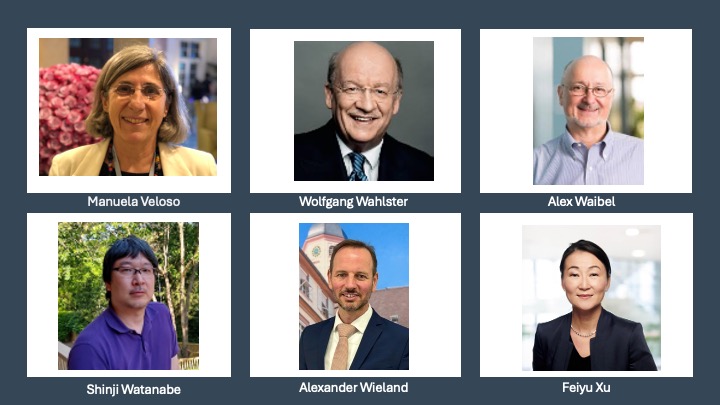
Manuela M. Veloso
Herbert A. Simon University Professor Emerita, School of Computer Science, Carnegie Mellon University 2018-2026 Founder and Head, JPMorganChase AI Research, Managing Director Manuela Veloso is the Herbert A. Simon University Professor Emerita at Carnegie Mellon University, where she has been since the early 90s as faculty in the Computer Science Department and then Head of the Machine Learning Department. From 2018 to 2026, she was the founder and Head of JPMorganChase AI Research.
Veloso has a licenciatura degree in Electrical Engineering and an M.Sc. in Electrical and Computer Engineering from Instituto Superior Técnico, Lisbon, an M.A. in Computer Science from Boston University, and a Ph.D. in Computer Science from Carnegie Mellon University. Veloso has Doctorate Honoris Causa degrees from the Örebro University, Sweden, the Instituto Universitário de Lisboa (ISCTE), Portugal, the Université de Bordeaux, France, and the Universidade Católica of Portugal.
She served as president of the Association for the Advancement of Artificial Intelligence (AAAI), and she is co-founder and a Past President of the RoboCup Federation. She is a fellow of main professional organizations in her area, namely AAAI, IEEE, AAAS, and ACM. She is the recipient of the ACM/SIGART Autonomous Agents Research Award, the Einstein Chair of the Chinese Academy of Sciences, an NSF Career Award, and the Allen Newell Medal for Excellence in Research. Veloso is a member of the National Academy of Engineering with a citation “for contributions to artificial intelligence and its applications in robotics and the financial services industry.” She is also a member of the Academy of Sciences of Portugal.
Her research interests are in AI, including Multiagent Systems, Autonomous Robots, Continual Learning Agents, and AI in Finance.
Wolfgang Wahlster
Wolfgang Wahlster is a Professor of Artificial Intelligence (AI) and a pioneer of AI in Germany and Europe. As a founding director of the German Research Center for Artificial Intelligence (DFKI) and in his role as its long-time CEO and scientific director, he has developed DFKI into one of the world’s largest research institutions in this field with more than 1000 employees by 2019 and more than 100 successful spin-off companies. He has served as an elected President of three international AI organizations: IJCAII, EurAI, and ACL. He is an elected Fellow of AAAI, EurAI, and GI. As a professor at the world-renowned Informatics Campus at Saarland University, he laid some of the foundations for natural language dialog systems, user modelling, and speech-to-speech translation. His current research areas are multimodal dialog systems for human-centered AI and cyber-physical production systems for the fourth industrial revolution (Industrie 4.0), a concept that he coined in 2010. He currently heads the steering group for a national AI standardization roadmap of the German government and serves the DFKI management board as Chief Executive Advisor (CEA). He is the President of the AI GRID and a member of the steering board of Germany’s platform for AI. Wahlster is a member of the Nobel Prize Academy in Stockholm, the German National Academy Leopoldina and three other prestigious academies. For his research, he has been awarded the German Future Prize, the First Class Cross of Merit and the Grand Cross of Merit by the Federal President of Germany. Other awards include five honorary doctorates from universities in Darmstadt, Linkoeping, Maastricht, Prague and Oldenburg as well as an Honorary Citizenship of his hometown, Saarbruecken. For his substantial contributions to various fields of AI, Wolfgang Wahlster received the IJCAI Donald E. Walker Award in 2013 and the ICMI Sustained Accomplishment Award of the ACM in 2016. As a member of numerous advisory bodies of the German Chancellor and the Federal Government such as the Partners for Innovation, the Research Union and the Data Ethics Commission, he has co-founded innovation platforms such as Industrie 4.0 and Learning Systems. He holds a seat on ten industrial supervisory boards and technical advisory boards of large companies, medium-sized enterprises and start-ups.
Alex Waibel
Alexander Waibel is Professor of Computer Science at Carnegie Mellon University (USA) and at the Karlsruhe Institute of Technology (Germany). He is director of the International Center for Advanced Communication Technologies at both locations. Waibel is a known pioneer in the areas of AI, Machine Learning, Multimodal Interfaces and Speech Translation Systems. He developed early Neural Network Speech and Language systems that are now part of modern AI. He pioneered cross-lingual communication to overcome language barriers in healthcare, tourism, social media, video-conferencing and media production.
Waibel founded & co-founded more than 10 companies and various non-profit services to transition results from academic work to practical deployment. This included “Jibbigo LLC” (2009), the first speech translator on a phone (acquired by Facebook 2013), “M*Modal” medical transcription and reporting (acquired by Medquist and now 3M), “Kites” interpreting services for subtitling and video conferencing (acquired by Zoom in 2021), “Lecture Translator”, the first automatic simultaneous translation service (2012) at Universities and European Parliament, and STS services for medical missions/disaster relief.
Waibel published >1000 articles, books, and patents (>43,000 citations, h-index 99, i10-index >500). He is a member of the National Academy of Sciences of Germany, member of the research group of AI of the German Science and Humanities Council (Wissenschaftsrat), a Life-Fellow of the IEEE, a Fellow of ISCA, and a Research Fellow of Zoom. Waibel was elected to a 12-member panel of AI pioneers to advise the Vatican on a global appeal for AI in the “Global Fraternity”, presented to Pope Leo XIV in September 2025.
Shinji Watanabe
Shinji Watanabe is an Associate Professor at Carnegie Mellon University, Pittsburgh, PA. He received his B.S., M.S., and Ph.D. (Dr. Eng.) degrees from Waseda University, Tokyo, Japan. He was a research scientist at NTT Communication Science Laboratories, Kyoto, Japan, from 2001 to 2011, a visiting scholar at Georgia institute of technology, Atlanta, GA, in 2009, and a senior principal research scientist at Mitsubishi Electric Research Laboratories (MERL), Cambridge, MA USA from 2012 to 2017. Prior to the move to Carnegie Mellon University, he was an associate research professor at Johns Hopkins University, Baltimore, MD, USA, from 2017 to 2020. His research interests include automatic speech recognition, speech enhancement, spoken language understanding, and machine learning for speech and language processing. He has published more than 300 papers in peer-reviewed journals and conferences and received several awards, including the best paper award from the IEEE ASRU in 2019. He serves as a Senior Area Editor of the IEEE Transactions on Audio Speech and Language Processing. He was/has been a member of several technical committees, including the APSIPA Speech, Language, and Audio Technical Committee (SLA), IEEE Signal Processing Society Speech and Language Technical Committee (SLTC), and Machine Learning for Signal Processing Technical Committee (MLSP).
Alexander Wieland
Alexander Wieland ist deutscher parteiloser Kommunalpolitiker.
Von 1991 bis 1996 studierte er Bauingenieurwesen an der Universität Karlsruhe. Von 1996 bis 2002 war er als Projektleiter bei Wolff & Müller tätig. Von 2002 bis 2007 war er Projektleiter bei der Entwicklungsgesellschaft Cité in Baden-Baden. Von Januar bis Juni 2008 war er als Projektleiter in einem Bauingenieurbüro tätig. Daraufhin war er von Juli bis November 2008 Technischer Leiter der Gartenstadt Karlsruhe. Von 2008 bis 2024 war er Geschäftsführer der Gesellschaft für Stadterneuerung und Stadtentwicklung sowie der Gesellschaft für Gewerbeentwicklung Baden-Baden. 2024 wurde er als Nachfolger von Alexander Uhlig zum Baubürgermeister, Ersten Bürgermeister und Stellvertreter des Oberbürgermeisters von Baden-Baden gewählt.
Feiyu Xu
Dr. Feiyu Xu is an AI expert known for leadership in research and industry. She serves on multiple supervisory boards, including Siemens Energy and ZF Group, and is a Non-Executive Director at Airbus Group. She co-founded nyonic GmbH (2023–2024) and was Senior Vice President, Global Head of AI at SAP SE (2020–2023) and Vice President and Head of the AI Lab at Lenovo Group (2017–2020). Previously, she was a Principal Researcher at the German Research Center for AI (DFKI). Recognized among Forbes China’s Top 50 Women in Tech (2019) and Manager Magazin’s 23 Most Influential Women in AI (2025), she is a frequent AI keynote speaker.